White label WordPress project takeover: Two sites for financial sector delivered in 5 weeks after the previous developer left

Śledź nas w mediach społecznościowych:

WordPress logo

5 weeks to deliver two sites after the previous developer left | 65 hours under the agreed hour cap | 24+ months of maintenance signed by the end client after launch


A small marketing agency from Chicago lost its freelance developer two weeks before the deadline for two websites for a financial services client. The client hadn’t seen a single preview. We agreed a realistic deadline with the agency, prepared arguments for the conversation with the client, and delivered both sites in five weeks with two developers and a project manager. The project used 365 of the 430 hours budgeted, and the client signed a maintenance package for at least 24 months.

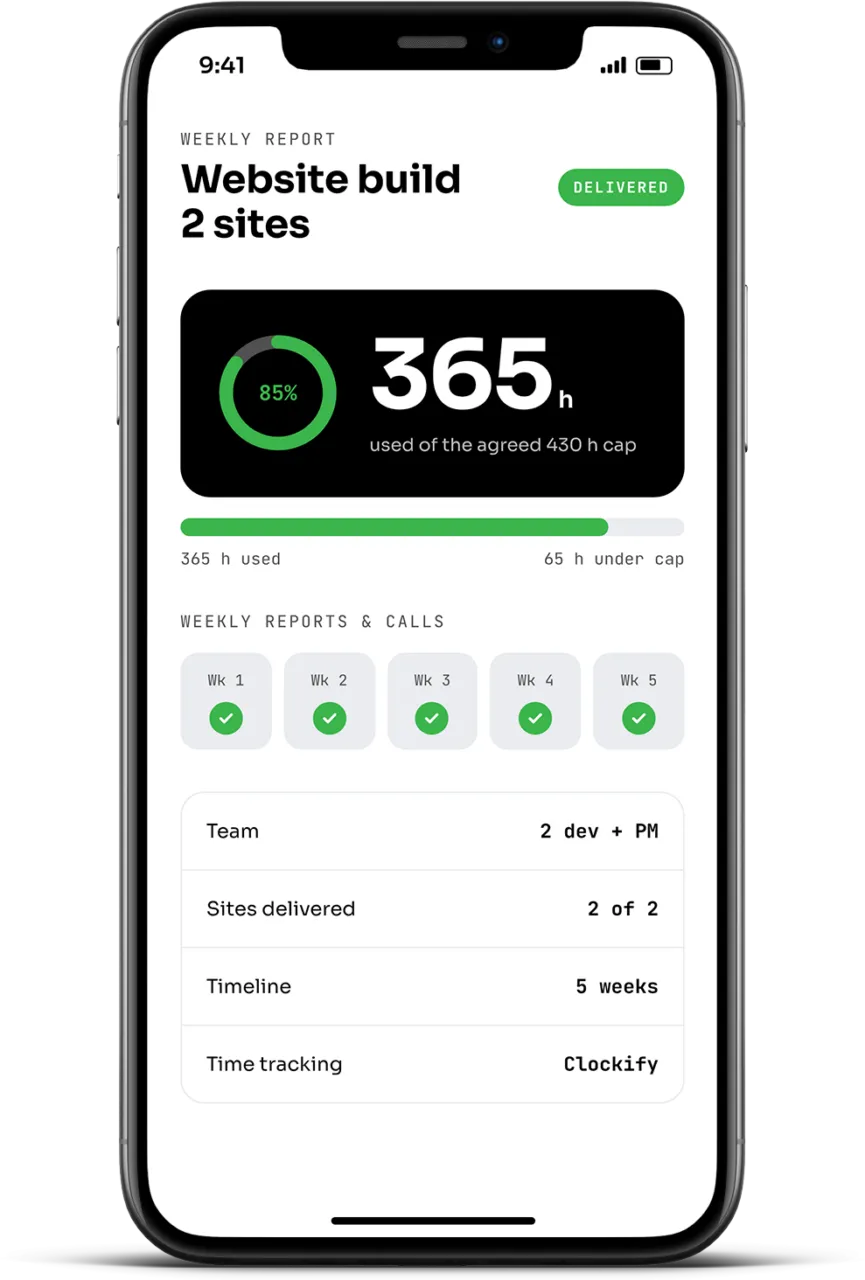
Weekly white label report: 365 of 430 capped hours used, weekly reports and calls over 5 weeks, 2 developers and a project manager

The situation

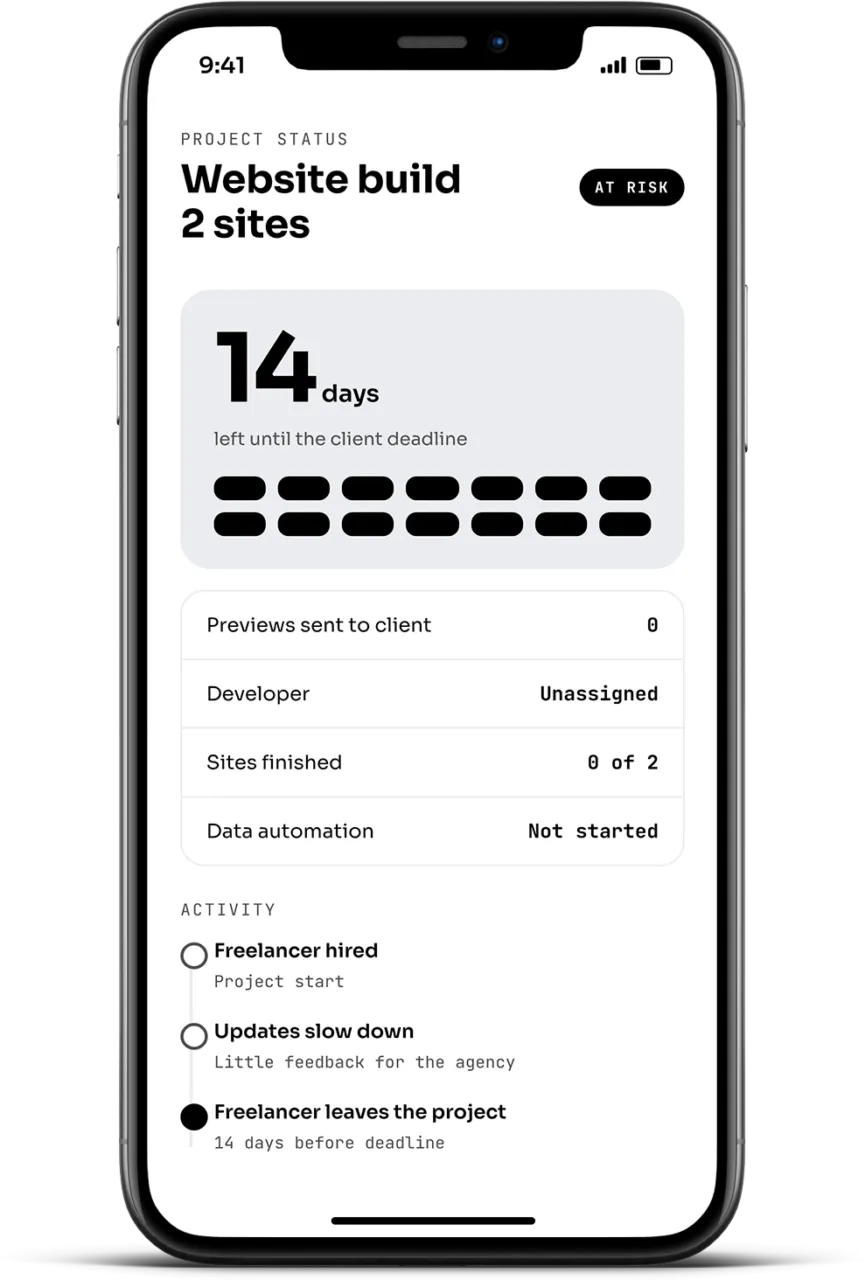
The agency had hired a freelancer to build two websites for a financial sector client. The sites were similar and built from repeating components. Communication with the freelancer was poor from early on: updates came late and the agency rarely got any feedback. Two weeks before the deadline, the freelancer told the agency they wouldn’t finish the project for personal reasons.

At that point the client hadn’t seen any previews. The project had looked fine at the start, so the sudden lack of progress made the client impatient. The agency was at risk of losing the client, along with future income from maintaining and developing the sites. Financial sector clients expect work based on facts and fixed dates, which made the delay even harder to explain.

    Agreeing on a deadline we could meet

    After reviewing the scope, we told the agency right away that two weeks wasn’t enough. Besides the sites themselves, the project included charts presenting the company’s financial data and daily automatic data updates, based on files uploaded to the server.

    We agreed a new deadline with the agency and prepared a line of argument they could use with their client: what the scope actually includes, why it needs more time, and what the client would receive and when. Once the client accepted the new date, we started work.

    How we worked with the agency?

    • Working in the agency's setup

      We worked entirely in the agency's tools (Slack, Wrike CRM). The design was ready, so we started with a kick-off meeting to go through it and plan the work. The project was split between two developers, and a project manager coordinated the work and the communication.
    • Hour cap and billing for actual time

      It was our first project in the agency's technology and tools, so we estimated carefully. We agreed on a cap of 430 hours that we wouldn't exceed and billed only the hours actually worked. The project closed at 365.
    • Weekly reporting

      Every week the agency got a report of hours used from Clockify, so they could see how much of the cap was left. We also met once a week to go through progress and anything that was slowing the work down.
    • Direct contact with the end client

      Knowing the client was frustrated with the pace of the previous work, we offered to contact them directly. Our project manager wrote to the client as a member of the agency's team, under the agency's name and from its email domain. We sent the client weekly progress updates and asked about anything that was unclear in the requirements.
    Project status screen: 14 days to deadline, no previews sent, no developer assigned and 0 of 2 websites finished after the freelancer left

    What we built?

    Wordpress development - praca nad stroną internetową

    Both sites were built in Elementor and ACF Pro, based on the agency’s design.

    The most demanding part was the fund data. The sites show daily prices, monthly, quarterly and yearly performance, holdings, cash positions and a growth of $10,000 chart, broken down by fund and share class. All of it updates without anyone at the agency or the client touching the site.

    We wrote the data processing from scratch. The data provider delivers CSV files straight to the server, and two PHP scripts run on a schedule (cron) to process them. The main parser reads each file, adds the data the source files don’t include with the help of a second script, builds a file in the structure the site expects and replaces the previous version. Charts and tables on the site then show the new figures. Each data type has its own run, so daily prices, holdings or quarterly performance can be processed or rerun separately.

    If a delivery comes in without new data, the parser stops, the current figures stay on the site, and we get an email notification. Neither the agency nor the client has to check whether the data came through.


    Results

    5 weeks
    Both sites were delivered within the new deadline agreed with the agency and its client.

    365 of 430 hours
    The project closed 65 hours under the agreed cap, and the agency paid only for the hours worked.

    24+ months
    After launch, the end client moved to continuous support of 10–20 hours a month, which has now lasted more than 24 months.

    What happend next?
    The agency still works with us.

    Scope of work

    • Project takeover and scope review
    • Deadline planning and support in client communication
    • WordPress development (Elementor, ACF Pro, PHP)
    • Financial data visualization
    • File parsing and daily data automation
    • Integration with an external data provider
    • Weekly reporting and project management